
Sunday, April 25, 2010
Musee d'Orangerie
If you are like everyone else and love impressionism, especially Claude Monet, there's a great little museum in the Tuileries just a short walk from the Louvre. I had been to d'Orsay, Pompidou, and the Louvre, but somehow I had not heard of this museum and would have completely missed it if no one told me about it. Inside, there are quite a few paintings from the early 20th century, including some by Renior, Cezanne, Matisse, and even Picasso. But the real treats are the Nympheas (water lily) murals that are housed in two big ovular rooms. These paintings were made in Monet's garden and are absulutely sublime. You can get so close that the painting looks like random brush strokes of varying color and then back away to the center of the room and watch the paining come together. One could easily spend hours sitting on the bench in the middle of the room. The museum is very pleasant and manageable, expessially compared to the giant museums of Paris which have cast a shadow over it. I highly recommend this experience to any human being, and for anyone who likes Monet it would be a tragedy to miss out.


Mont St. Michel
 Mont St. Michel is one of the most magnificent places I have seen in France. When we got there the first night, it was dark out, and the mountain was kind of glowing, like the picture to the right. And the point from which this picture was taken was about where we got dropped off by the bus.
There are a couple of pretty important things you should know before going there. You should definitely check out the website, but it is a little confusing and hard to work with. The most important things to look at, however, are Lodging, Places to Visit, and Access.
If you're trying to get a hotel on the mountain itself, you should try for reservations in advance, especially during the spring.
Here are the links to the websites of a couple of nice hotels we noticed:
We stayed in La Vieille Auberge, which turned out to be an amazing choice. Our room was off the main road (which is kind of a loose term here, since there are no cars on the island) and up some stairs. When we looked out our window to the right, we could see the Abbey, and to the left, the ocean and the causeway. Wherever you stay, though, make sure you have their number on your phone. We had to call the owner of the hotel to come show us our room, because we arrived after everything was closed (which happens around 7pm in the off-season). But if you forget, at the entrance to the city, there is a tourism office with the numbers of the hotels posted outside.

Again, when we were there, everything closed around 7. In the off-season, the Abbey sells its last tickets at 5pm, and most of the museums are open from 9am to 5:30pm. Make sure you check on times before you go.
There is a series of four museums scattered across the lower levels (before you get to the Abbey), and you can get a deal by buying tickets for all of them at once. If you're between 18 and 25 years old, the price for one museum is the same as the price for all four, 9 euro. If you're over 25, to see one museum is 9 euro and to see all of the museums is 18 euro. Either way, it's a good deal.Also, seeing the Abbey costs 8.50 euro, and it's completely worth it. It's a huge place, as you can see from the pictures, and there are a lot of impressive rooms, not to mention an incredible view from the top.
Also, there are two main options to get there by train. You can get a ticket to either Rennes or Pontorson. Pontorson is much closer, so if you're going late at night or don't think you will catch the bus, taxis would be cheaper from Pontorson.
As incredible as the city is, you won't want to spend tons of time there. Once you've seen the museums, the Abbey, and the view, there's not much left. The city itself is beautiful, but it kind of feels like you're walking inside of a Renaissance reenactment or something. You should try to make a weekend of it, though, and go to St. Malo one day. We didn't go because we missed the bus the first day, but it was highly recommended by Stan's host family, who called it a pirate village.
Climing the bell tower in Florence

If you travel to Florence, which I think most students already have this year, be sure to go to the top of the bell tower. It costs a little too much to get in (6euros) and it's a long way up, but the view is really worth it and there are many platforms where you can see the city and take a break from the climb. Once at the top, you can see the great dome at eye level and really realize how huge it is. Also, you can see the almost equally tall tower of the Palazzo Vecchio, in which Cosimo de Medici was once held prisoner.
I recommend that you make the journey up the tower one of your last events in Florence. It's better to have walked the city streets first and be able to identify from above all of the places that you have been to.
 (Above:) Duomo seen from the bell tower; (below:) Palazzo Vecchio from the bell tower
Saturday, April 24, 2010
A word of advise
I'm pretty sure that if you are applying for the abbey as a music student you will not be the person spending time on a student blog. But just in case you are, allow me to caution you. Being a music student, I'm sure that you are accustomed to spending countless hours practicing and rehearsing IN ADDITION to all of the normal classroom and homework requirements of a student without your heavy responsibilities. So it would seem like a relative walk in the park to enroll for only 12 hours of class. But in addition to these classes, there are other time wasting devices such as your required attendance at movie nights. What could the purpose of this possibly be??? I find myself at an academic institution where I am obligated to devote nearly 3 hours of my day (hours in which I could be improving my future by practicing, or working away at my looming homework obligations) to watch Harry Potter. There are also these pointless things called chateau groups, through which we are insistently warned against dirtying the kitchen and then asked to share experiences.
In addition to these events, there is the general attitude of the faculty towards our work as being entirely pointless except as recreation for us. As if practicing violin technique were the same as jamming with a garage band. (I pause here to say that there are some among them who thoroughly appreciate and assist in accomodating our work.) It is with this mindset that we are told that, in addition to our musical activity, we must be students.
So, I would like you to know that your musical studies will be made, not with the abbey, but in spite of it.
In addition to these events, there is the general attitude of the faculty towards our work as being entirely pointless except as recreation for us. As if practicing violin technique were the same as jamming with a garage band. (I pause here to say that there are some among them who thoroughly appreciate and assist in accomodating our work.) It is with this mindset that we are told that, in addition to our musical activity, we must be students.
So, I would like you to know that your musical studies will be made, not with the abbey, but in spite of it.
Surprise in Venice

When visiting the Basilica San Marco in Venice, we decided to pay the extra money to see the museum upstairs just so we could see the square from the balcony. Unbeknown to me before entering, the museum contains the famous bass of Domenico Dragonetti, who was the first person to become a virtuoso of the double bass (and there have been few as important since). I learned that Dragonetti was not only born in Venice, but remained there well into his thirties, despite the many prestigious offers that his reputation had earned. Allegedly, it was in gratitude for his continuing service to the church and the city of Venice that he was given the great instrument by a Venetian Convent. He eventually left the city and went on to make a huge impact on the world, befriending none other than Ludvig Van Beethoven whose eyes were opened to the potential of this instrument. Their collaboration would forever change the way composers write for the Bass. After a long and successful life, Dragonetti asked as a dying wish that his Bass be returned to San Marco and there, in the museum, it remains.
Be prepared!
Most everybody that signs up for this program probably has the same impression as I did before I came, which is that its gonna be awesome to get all these classes away in such a short semester and only meeting two times a week makes it a piece of cake. Its not quite like that. Everybody here at the abbey is required to take at least 12 hours, that is, 4 classes. Unfortunately, these classes are not as easy as they sound, because they are very time consuming with all the homework/assigned reading and a the classtime takes up a good portion of your day. Towards the end of the semester, the homework gets really rough and there's not much time for leisure because they pile it all on at once. All I'm saying is that you should be careful choosing your classes. Dont load yourself on with all your core classes, but take some fun classes as well. A good idea might even be to take online classes; they could be easier. I have found my free time slipping away little by little. Plus, after that long three weeks without any classes or obligations, coming back to loads of boring core classes can really be a burden. Another thing: check to see which of the classes that are offered actually count towards your major and if there are related classes to a class you might need, such as an english class that is not exactly the number you need but might be an upper-level course, check to see if you can get credit for your needed core class by taking that one; they are plenty willing to work with you on this.
“White Man’s Burden,” New Imperialism in Europe and the Scramble for Africa
“White Man’s Burden,” New Imperialism in Europe and the Scramble for Africa

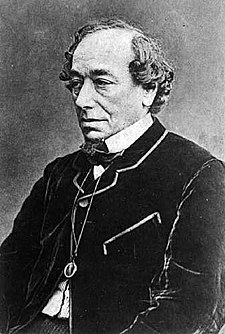
After the termination of the American Revolutionary war in 1783 demonstrated the impracticality of maintaining colonies far away from the home country, the world saw a pause in colonization of almost a hundred years. Nations realized that the economic benefits of colonizing distant lands could be gained much more simply through free international trade. A “laissez-faire” policy allows trade with lands and territories without the intervention of the state and proves to be beneficial without the effort and expenses required to dominate the region of trade. However, in 1872, the charismatic (if not comprehensive) speeches of British Prime Minister Benjamin Disraeli (image to the right) set off another era of empire building in Europe and especially Britain known as “New Imperialism.”
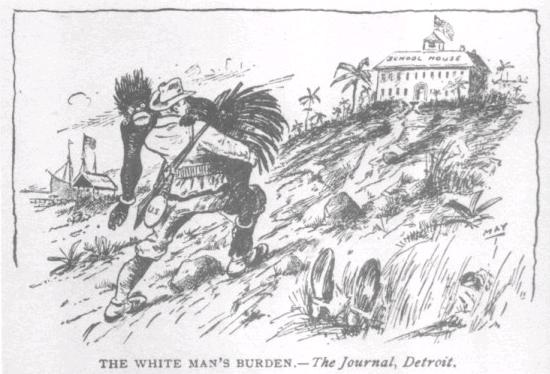
New Imperialism was not the result of necessity or a logical cause, but a change of attitude in many aspects and for many peoples. Disraeli’s speeches managed to instill in the British people a sense of nationalism and superiority that made their dominance of many different parts of the world a sensible course of action. For some, there was the idea of social Darwinism. That is, Europeans (and once again, British especially) had achieved a much higher level of civilization, culture, and national might than the rest of the world, and therefore their dominance of other countries could be seen as nature taking its course, as if the fact they had the ability to take over other nations meant that they ought to. There was also the so-called “white man’s burden” which meant that Europeans had an obligation to spread their sophistication to the rest of the world (through conquest, of course) to raise them from their lowly and uneducated state. (following links depict the "white man's burden")
Image of Kipling's White Man's Burden

A particularly interesting case is found in the Boer Wars of British South Africa.(See Image Above)
(The British had colonized South Africa and forced the Dutch out because they wanted control of the Cape of Good Hope, but after gold was discovered in the Transvaal Republic (the new home of the Dutch), the Dutch, or Boers (since at this point they were their own civilization), began to grow in influence and stock up on military equipment. Tensions rose between the two colonies and Britain found itself in a war that would last for 3 years and cost a lot of money and many lives. Even after winning the war, it became evident that the country could not maintain an imperial policy when the control of a small country became so difficult. The termination of this conflict coincides with the publication of J. A. Hobson's Imperialism, which criticizes the Imperialist activities of the British Empire, claiming that they benefit only a small group of investors at the expense of the entire nation. The Boer war as well as this publication mark the end of Imperialism in Europe.
Field Marshal Lord Roberts of Kandahar




Chelsea Tanous, Stan Roberts, Chris Dean
Subscribe to:
Posts (Atom)